

‘This program changes lives’
A unique mental health program for youth comes to Edmonton

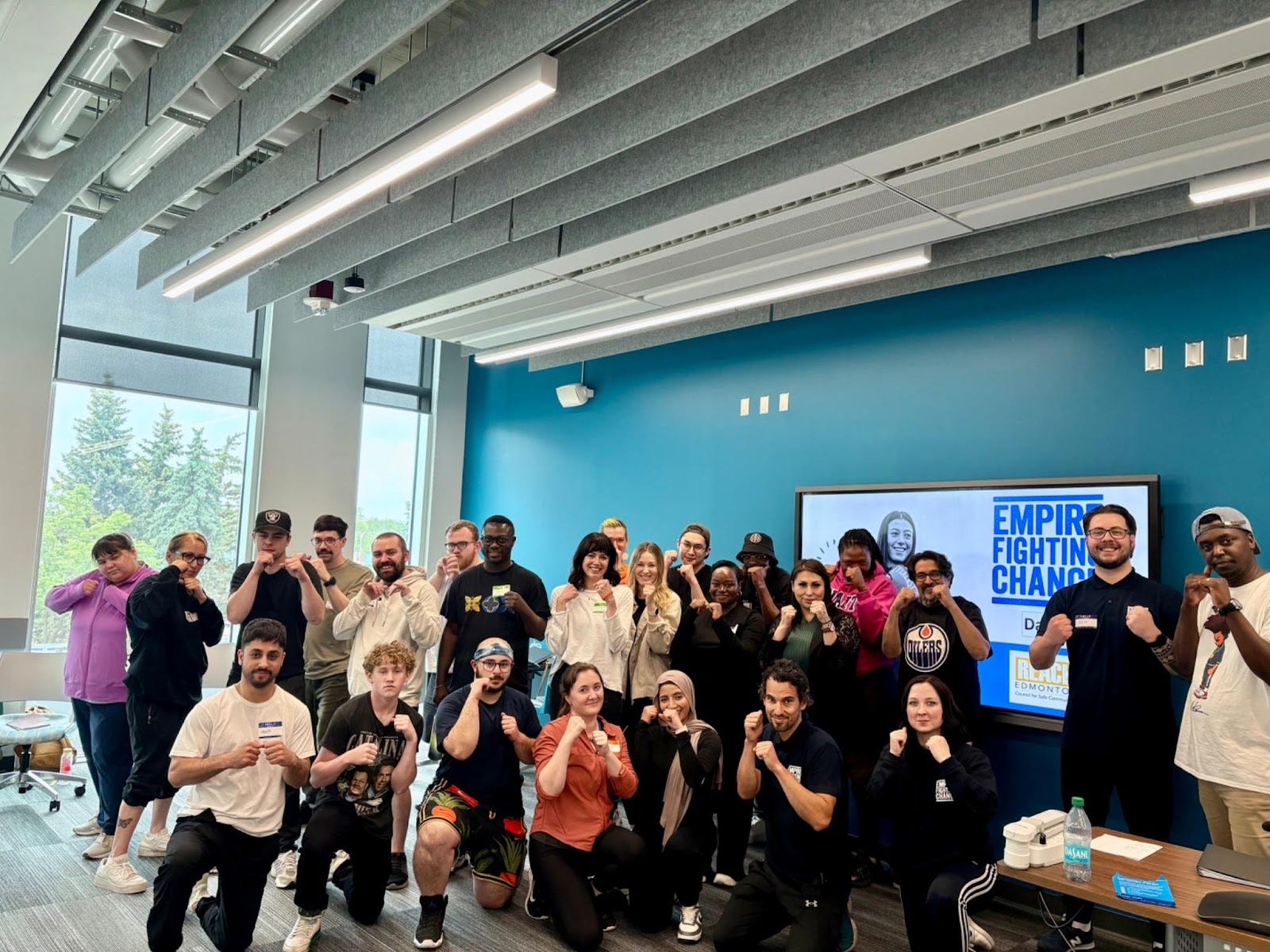
A new youth-focused initiative in Edmonton brings together community safety, mental health support, and mentorship through unconventional means: boxing. This summer, REACH Edmonton teamed up with Empire Fighting Chance to bring its boxing and youth support model to Edmonton for the first time.
REACH Edmonton is a non-profit focused on developing community safety strategies and crime prevention, while U.K.-based Empire Fighting Chance works with youth, using non-contact boxing as a tool to help them build resilience, empowerment, and healthier lives.
“Our goal is to find a different, unique way to really empower and engage young people who are often on the sidelines,” says Tania Ymbi, project coordinator from REACH.
Empire Fighting Chance’s team travelled to Edmonton to train REACH staff on how to deliver the program in their local communities. Over four days of training, eight other youth-focused organizations also took part, exploring how it could be adapted to fit their own work.
“I think the future in Edmonton for us is massively exciting,” says Martin Bisp, co-founder and CEO of Empire Fighting Chance.
Training other organizations to run the program in their own communities was always a key priority, says Bisp. Empire Fighting Chance reaches around 10,000 vulnerable young people every year, and Edmonton marks its first international partnership.
“This program changes lives,” he says. “Young people who come to us often leave in a better place than they came. They exit gangs, they exit criminal behaviour, they go back into school, and they improve their mental health.”
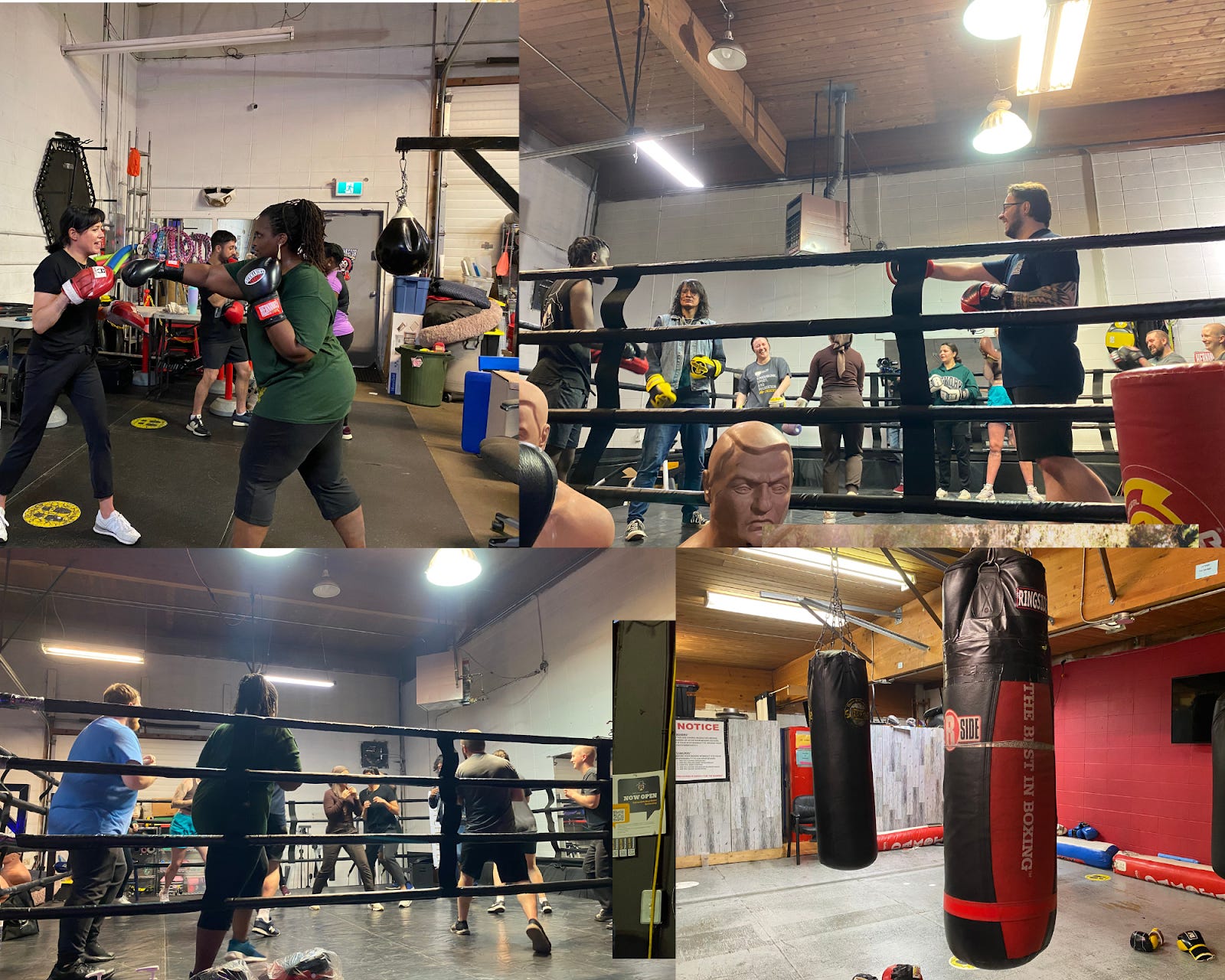
From a psychological standpoint, non-contact boxing has proven benefits for the release of anger, aggression, stress, and anxious energy, according to a 2023 study published in the American Journal of Lifestyle Medicine. But for Sam Kotadia, a sports psychologist with Empire Fighting Chance, the program goes far beyond just emotional release.
“It's not just about the boxing,” he says. “We make sure the young people realize that boxing is a vehicle for them to understand themselves at a deeper level.”
Kotadia emphasizes that the program is not another psychological quick-fix program, but one that is focused on helping young people learn self-awareness by feeling and understanding their emotions.
“It's about knowing that however you feel is absolutely fine, and when we feel comfortable with the uncomfortable, then we actually go out into the world and we do more,” he explains.
Jan Fox, executive director of REACH, says she sees this program helping so many young people. She attributes the program’s unique approach to helping youth as a main reason for its success.
“We need so many tools in our toolkit for young people today,” Fox says. “Someone who is living a vulnerable lifestyle or maybe part of a gang, there's not a great likelihood that they're going to walk into a social worker’s office or psychology office, but they might walk into a boxing gym.”
The program was launched with $250,000 of seed funding, but its future depends on long-term support. Fox says with stable funding, their goal is to launch a permanent version of the program.
“If we were to get some increased or sustainable funding, I know that we could reach so many kids,” she adds.
To learn more about the program or find out how to get involved, reach out to Tania Ymbi at Tania.Ymbi@reachedmonton.ca.
Thank you to author Mikayla Pohl and Rat Creek Press. I wouldn't know about this beneficial health program without you.