

Ordered back to class
Alberta’s post-strike classrooms still waiting for change

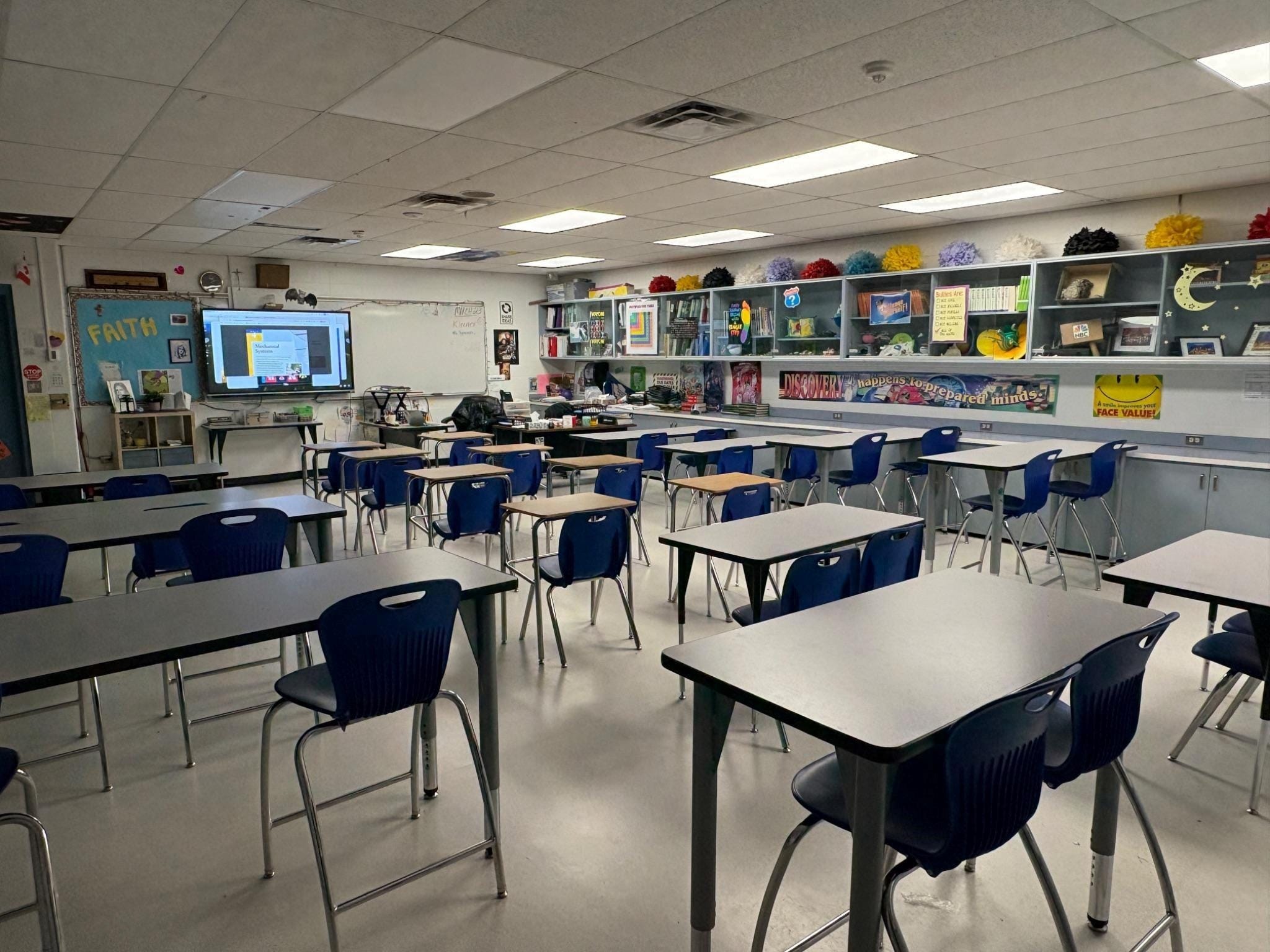
The classroom was tense. Students sat down quietly, avoiding eye contact. Some shifted in their seats and clicked their pens, waiting for something to happen.
Their teacher walked to the front of the room, her mouth set in a straight line where a smile usually was. The lesson began as normal, but the tone had shifted. Frustration hung in the air.
In the last week of October 2025, Alberta teachers were ordered back to the classroom after a three-week strike.
Rachel Clark, a Grade 10 student, remembers the feeling of that first day back.
“The mood in the room was awkward,” she says.
She recalls students feeling really anxious and filled with uncertainty about what might come next. Her teachers’ irritation was very clear.
“When we first came back, we were all super stressed,” she adds. “The teachers were still annoyed and the students were just confused. We were all nervous.”
But Clark understood her teacher’s reaction. To her, it was clear that nothing had really changed in the classroom.
Almost six months ago, the Government of Alberta passed the Back to School Act, ending a province-wide strike and imposing a collective agreement. But some Alberta teachers say they have yet to see meaningful change in their classrooms.
Jen Heschuk, a junior high teacher of 28 years, says things are the same as before, with the added stress of losing five weeks of school. Her main concern is classroom conditions and the lack of resources to keep up with things like language barriers, behavioural issues, and diverse learning needs.
“It’s hard to manage,” she says. “I have one Grade 8 science class with 30 kids. Some kids are as low as Grade 5 and some are as high as high school. They are all learning differently.”
“When you have that many bodies in a classroom with one teacher… it’s hard,” she adds.
Some of Heschuk’s students require special accommodations like speech-to-text devices or different versions of a test.
She emphasizes the need for more educational assistants (EAs) in the classroom. In her school district, they are training EAs internally, who have no formal training, to make up for the lack of support.
“One of my EAs was a bus driver last year,” she recalls.
Heschuk says she has been waiting since the strike for the government to address her concerns and nothing has changed yet.
The provincial government, however, has said the imposed agreement is intended to resolve these issues.
“Passing the Back to School Act means we are investing in our teachers,” wrote Premier Danielle Smith in a letter to Alberta parents.
The agreement included a 12-17 per cent salary increase, as well as hiring 3,000 new teachers and 1,500 EAs. The government also committed to build 130 new schools by 2030.
The letter said many attempts to bargain with the teachers’ union were made and that one week before the order back to work, the government offered enhanced mediation. A process that would allow negotiations to continue with mediation from a third party, while teachers went back to work.
“Unfortunately, union leaders declined this offer,” Smith wrote.
In response to the Back to School Act, Alberta Teachers’ Association (ATA) President Jason Schilling said in a media release that teachers were being forced back to work with a collective agreement that 90 per cent of teachers had previously rejected, adding that it ”does not meet the needs of their students, their classrooms or their profession.”
Months later, the provincial government sent out a text message to Albertans on March 27, 2026, claiming to be building new schools, funding complexity teams, and hiring more teachers and educational assistants.
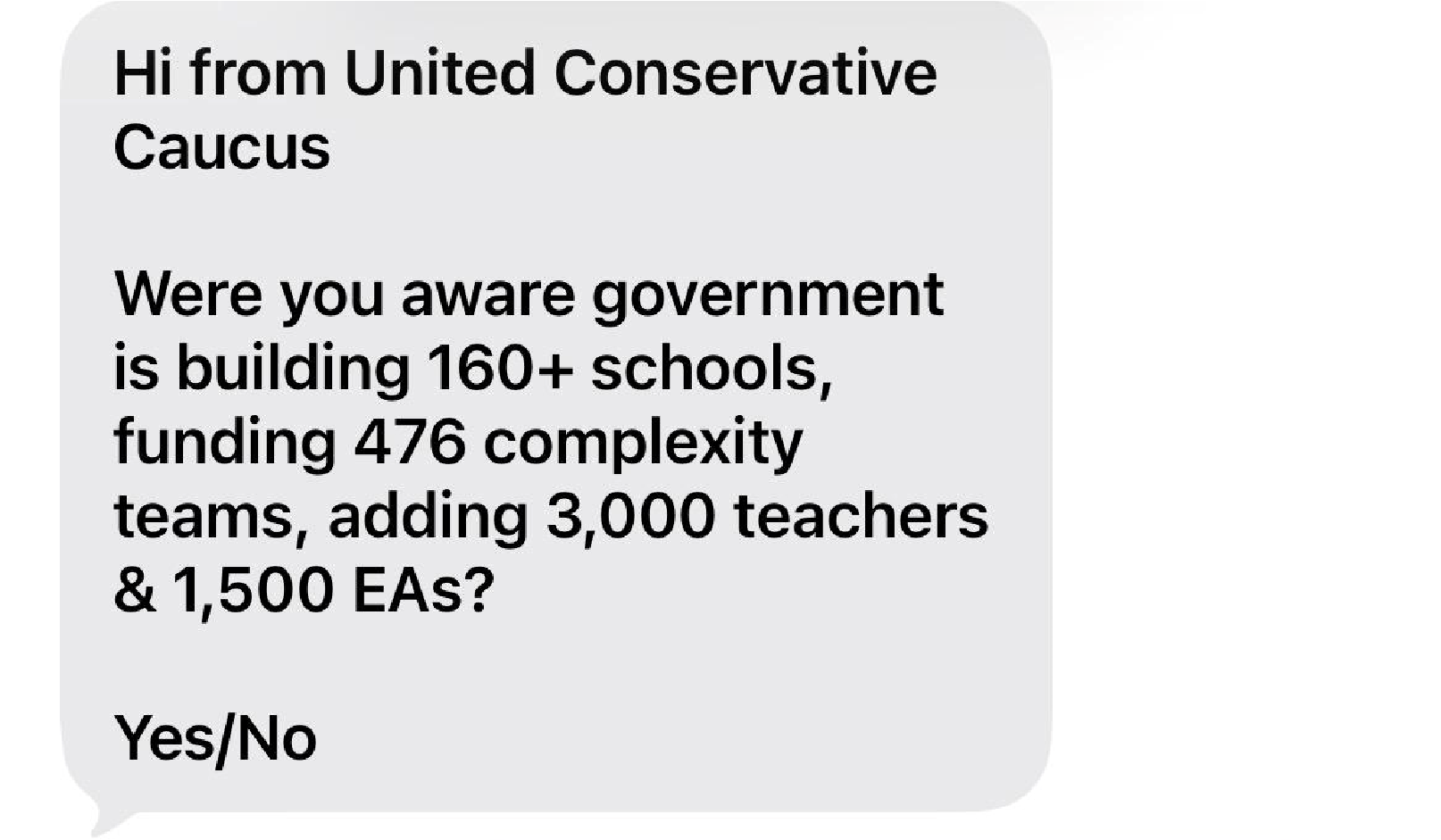
Carryl Bennett, one of the local ATA presidents and teachers, responded to the message:, “Did you really expect support from your blind promises, tone-deaf platitudes, and destructive manner?”
“It’s a systematic attempt at breaking things,” Bennett says.
Bennett references the government’s recent pilot program that dedicates $90 million to private schools: “Public schools could have done something with that. That would have been really helpful.”
Bennett also says nothing has changed.
“I don’t have any more teachers to help out. I don’t have any more EAs to help out. There is not a single measurable difference in my classroom.”
She said that she is not confident that any of the government’s promises in the imposed agreement will actually occur.
On Nov. 6, 2025, the ATA took legal action to overturn sections of the provincial government’s Back to School Act. The union also requested an injunction, or pause, on the act during legal proceedings. The union argued that the Act, which passed through the notwithstanding clause (used to temporarily override specific sections of the Charter, including fundamental freedoms, legal rights, and equality rights), violated their constitutional right to bargain and strike.
The ATA’s request to pause the act was denied by a judge on March 13. However, the union is still allowed to pursue their legal case, with the full hearing starting in September 2026.
“Until the full hearing, the Association will continue to hold the government accountable for everything promised to the public education system,” said Schilling in a release.
For teachers like Jen Heschuk, this conflict goes beyond the classroom.
“This is a bigger issue, this is a social issue. These are human rights. It’s not just about teachers on strike anymore,” she says.
After the injunction was denied, Heschuk says all that teachers can do is wait. As a parent, she also recognizes how the strike last October impacted students.
“I felt bad because it adds extra stress on families especially with younger kids and it adds stress on students,” she says.
Despite that, Heschuk feels that any more strike action would not be beneficial for her students.
“Going forward, I’m just going to keep doing what I do and hopefully change brings better conditions,” she says.
For now, that wait isn’t playing out in courtrooms. It’s unfolding inside classrooms, filled with students like Rachel Clark.
Clark says stress levels are down and that student life has gone on as normal. Conversations between students no longer center around the conflict. Laughter is in the classroom again. Students are cracking jokes and talking over the teacher, the way it’s always been.
But all of the issues that caused the strike in the first place still remain. She recalls teachers spending their own money on things like books, art supplies, and tools because the school could not afford them. She also said there is a lack of EAs.
“[Teachers] can’t really do anything else without more resources and more help,” Clark said.
As a student, Clark is relieved the strike is over, but also wants to see justice for all parties as decisions are made.
“Try and get the perspective of students and teachers and even the government,” she said. “There are always two sides. People need to understand both sides.”